
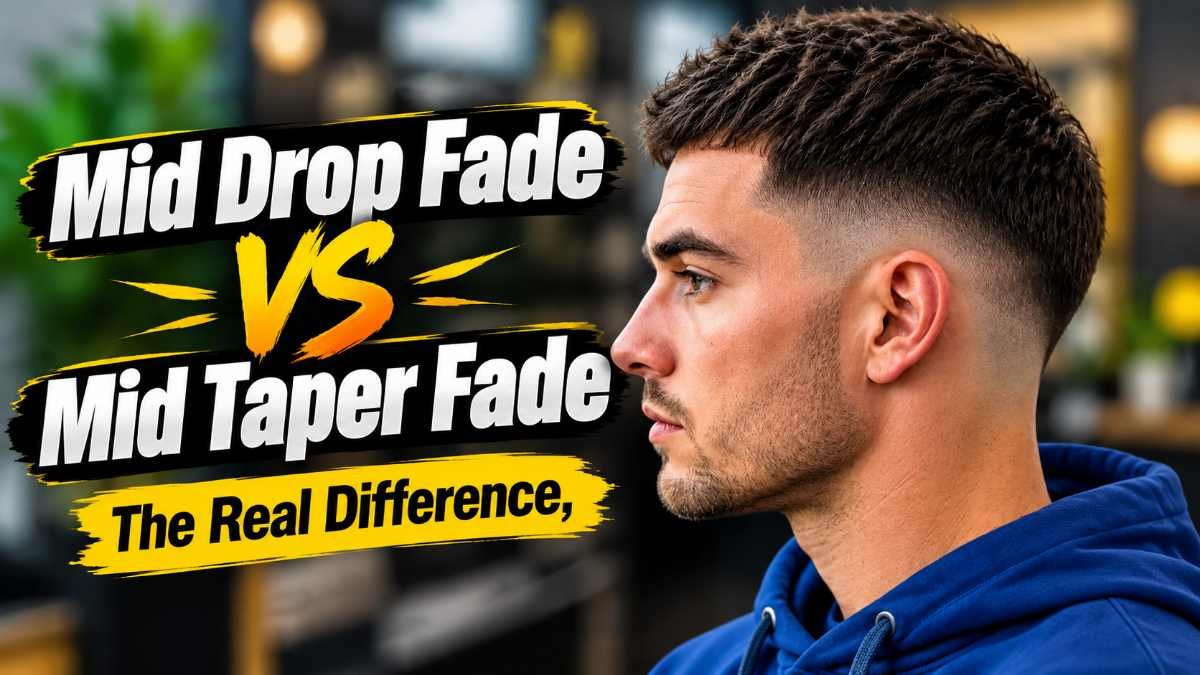

You’re sitting in the barber chair, scrolling through photos, and two haircuts look almost the same. One is called a mid drop fade. The other is a mid taper fade. Are they twins? Not quite. This guide breaks down the mid drop fade vs mid taper fade debate in plain words, so you walk out with the cut you actually wanted.
Mid drop fade vs mid taper fade: the difference
Here’s the quick answer before we go deep.
A mid taper fade keeps a straight, even fade line as the hair gets shorter down the sides and back. Think clean and simple.
A mid drop fade does the same gradual shortening, but the line curves or “drops” behind the ear instead of staying flat.
That curve is the whole ballgame. It’s a small detail, but it changes the entire vibe of the cut. A taper haircut feels classic and safe. A drop fade haircut feels bold and a little more modern.
Both fall under the bigger umbrella of a fade haircut, and both usually pair with a mid fade height, meaning the fade starts around the middle of the head rather than up near the temple or way down by the ear.
Mid drop fade vs mid taper fade, side by side
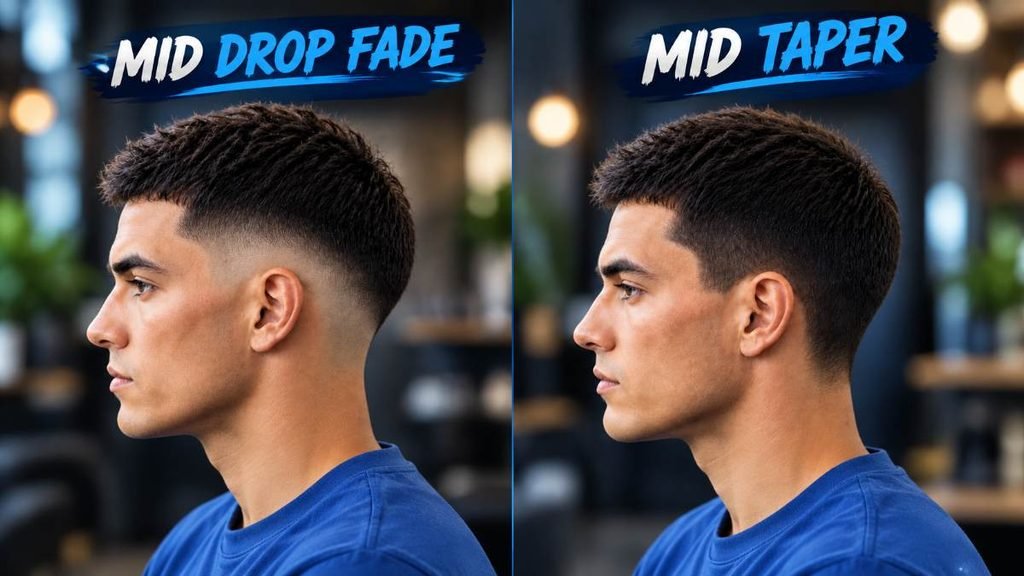
Sometimes a table says more than three paragraphs. Here’s a quick haircut comparison you can screenshot before your next barber visit.
| Feature | Mid Taper Fade | Mid Drop Fade |
| Fade line shape | Straight | Curved, drops behind ear |
| Overall vibe | Clean, classic | Bold, modern |
| Best for | Work, school, formal settings | Casual, trendy looks |
| Best hair type | Straight or wavy | Curly or thick hair shows the curve best |
| Neckline style | Clean taper neckline | Follows the drop curve |
| Maintenance | Every 3 to 4 weeks | Every 2 to 3 weeks |
Notice the pattern. A mid taper haircut stays simple and forgiving. A mid drop fade haircut asks for a bit more precision, but rewards you with a sharper look.
Is “mid taper fade” even a real thing?
Good question, and one a lot of guys ask. Here’s the honest answer: yes, it’s a real term, but it confuses people because “taper” and “fade” get used loosely at barbershops.
Technically, a taper is the gradual blend itself, the way hair shortens smoothly from long to short. A fade is when that blend goes all the way down to skin, or close to it.
So “mid taper fade” simply means:
- The blend starts at a mid height on the head
- It uses a taper technique, meaning a smooth, gradual shrink
- It finishes as a fade, going close to the skin near the bottom
One barber I spoke with put it this way:
“People think taper and fade are different cuts. They’re not rivals. A fade is just a taper that goes all the way down.”
That one line clears up more confusion than most YouTube tutorials.
Where does the “drop” fit in?
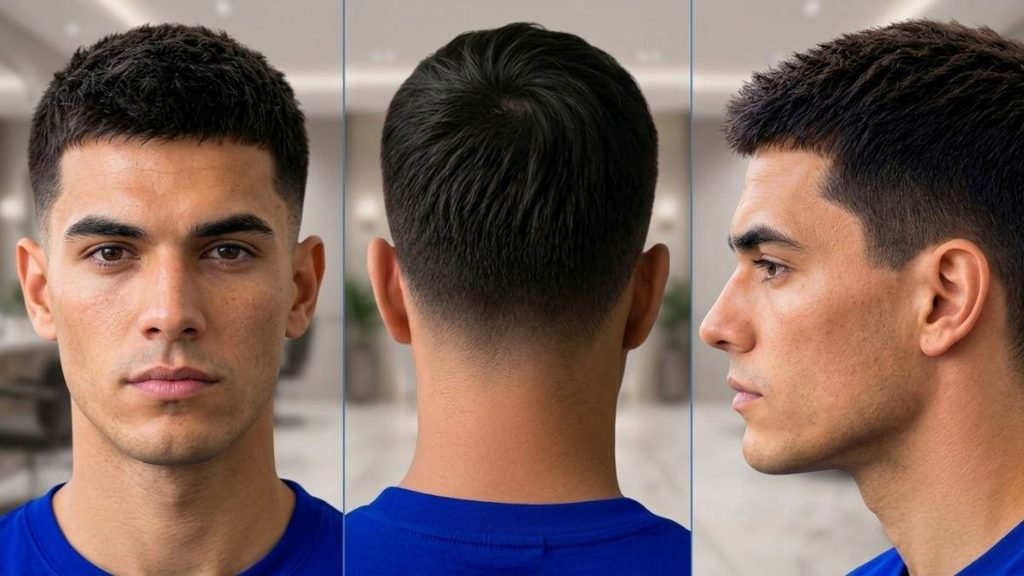
The drop fade isn’t a totally separate category. Think of it as a style choice you add on top of a regular fade.
Here’s what makes it a “drop”:
- The fade line starts high near the temple, just like a normal taper
- Instead of staying straight, the line curves downward behind the ear
- It usually connects into a slightly lower point near the neckline
This drop curve works with your head shape and hairline instead of ignoring it. That’s why barbers often recommend it for guys with thick or curly hair. The extra hair density makes the curve pop, so the style actually shows off instead of getting lost.
You’ll also hear terms like low drop fade and high drop fade. Those just describe where the fade starts before it curves down. A mid drop fade sits right in the middle, not too aggressive, not too subtle.
Mid drop fade vs mid taper fade compared
Let’s go a little deeper than the table above.
Mid taper fade works like a reliable pair of jeans. It goes with everything. Job interview? Fine. Family dinner? Fine. First date? Also fine. It’s the conservative haircut choice, and there’s nothing wrong with that. A professional hairstyle doesn’t have to be boring, it just has to be neat.
Mid drop fade works more like a statement jacket. It stands out, it gets noticed, and it says you put thought into your look. Picture two guys at a summer festival. One has a straight taper, clean and simple. The other has a drop fade, and his fade curves smooth behind his ear, catching the light when he turns his head. Same haircut family, totally different energy.
A cousin to both of these is the burst fade taper haircut. Instead of a straight or curved line, a burst fade taper haircut curves in a circular shape around the ear, almost like a burst of light. If you love the drop’s curved look but want something even more unique, a burst fade taper haircut might be your next barber request. Many guys now ask for a burst fade taper haircut specifically because it blends the neatness of a taper with the flash of a fade in one small area.
The detail that gives it away
If you ever want to spot the difference in a photo before you show your barber, look at one spot: behind the ear.
- Straight line behind the ear? That’s a taper fade.
- Curved line dipping down behind the ear? That’s a drop fade.
That’s it. That’s the tell. Everything else, the sharp gradient, the skin close finish up top, the gradual transition through the sides, can look almost identical between the two. The curve behind the ear is the fingerprint.
Even a burst fade taper haircut gives itself away this way too. Instead of one curve, it forms a rounded shape that wraps the ear, so once you know to check that spot, you’ll never confuse these cuts again.
How a mid drop fade vs mid taper fade grows out
Every haircut grows out. Some just grow out better than others.
Mid drop fade
The curved line needs a bit more attention as your hair grows. Since the drop follows a specific path behind your ear, a couple weeks of growth can blur that clean curve into a fuzzy blob. Guys who keep a burst fade taper haircut or a drop style usually book a touch up around the two week mark to keep the curve sharp.
Mid taper
A straight line is more forgiving. As it grows out, it just softens gradually instead of losing its shape completely. You can usually stretch a mid taper haircut to three or four weeks before it starts looking messy. That’s one reason guys with busy schedules lean toward the taper over the drop.
Which one costs less to keep?
Let’s talk money, because haircut cost adds up over a year.
The average barber visit in the USA runs somewhere between $25 and $45, depending on your city and the shop. Here’s the real cost difference:
| Cut Type | Visits Per Year | Estimated Yearly Cost |
| Mid Taper Fade | 13 to 17 visits | $325 to $765 |
| Mid Drop Fade | 17 to 26 visits | $425 to $1,170 |
That gap comes down to fade maintenance and taper maintenance schedules. A taper stretches longer between visits. A drop fade, especially a detailed burst fade taper haircut, needs more frequent trims to keep that curve looking sharp.
If your budget is tight, the taper wins. If you don’t mind a few extra trips, the drop delivers a look that’s hard to beat.
Which should you get?
Ask yourself these three quick questions before you decide.
What’s your hair texture?
Curly or thick hair shows off a drop’s curve beautifully. Fine hair or straight hair often looks cleaner with a simple taper.
How often can you visit the barber?
If every two weeks works for you, go drop. If you’d rather stretch it out, go taper.
What’s your daily setting?
Office job with a dress code? Taper. Creative field or casual lifestyle? Drop fade gives you more personality.
Your face shape matters too:
- Round face: A drop fade adds angles and breaks up roundness
- Square face: Either works, but a taper keeps things balanced
- Oval face: Most versatile face shape, both cuts look great
- Long face: A taper with more hair coverage on top balances your proportions
- Heart-shaped face: A drop fade draws attention downward, which softens a wider forehead
How to ask for each one
Walking into a shop with the right words saves you time and awkward back and forth.
For a mid taper fade, say: “I want a mid taper fade, straight fade line, skin close at the bottom, blending into a taper up top.”
For a mid drop fade, say: “I want a mid drop fade, with the line dropping and curving behind my ear, skin close fade underneath.”
For a burst fade taper haircut, say: “Can you give me a burst fade taper haircut? I want the fade curving around my ear like a burst, blended into a taper on top.”
One more tip: always bring a photo. Words help, but a clear photo removes all guesswork. Barbers see hundreds of clients a week, and a picture speaks louder than any description.
Frequently asked
Can I switch from a taper to a drop fade?
Yes, easily. Since a drop fade is just a curved version of the same fading technique, your barber can reshape the line at your next visit.
Does a drop fade work with straight hair?
It can, though the curve shows up more clearly with textured hair. Straight hair can still pull off a subtle drop.
How long does a mid fade last looking sharp?
Usually two to three weeks before you’ll want a touch up, depending on how fast your hair grows.
Is a drop fade or burst fade taper haircut harder to cut?
Yes, both take more skill than a standard taper. The curved or circular shape demands precision, so choose a barber with solid fade experience.
What if I have thinning hair?
A taper often looks cleaner on thinning hair since it doesn’t draw extra attention to scalp visibility. A skin fade paired with short length on top can also help minimize the appearance of thinning.
Conclusion
So there you have it. A mid taper fade keeps things straight, simple, and classic. A mid drop fade curves behind the ear for a bolder statement. Want something even sharper? A burst fade taper haircut takes that curve up a notch. Whichever you pick, bring a photo, know your hair type, and trust your barber’s hands.

Emily Carter
Emily Carter is a hair and beauty writer who shares practical hair-care tips, hairstyle ideas, styling inspiration, and the latest hair trends. Through Fashquin, she aims to make hair content simple, useful, and enjoyable for readers looking for fresh ideas and everyday hair inspiration.
